Saturday, September 19, 2015

Moscow Metro ~ A Benefit of Communism (Part 3 Feb 16)

Moscow Metro  ~ A benefit of Communism 

Lenin Bust in Metro 
The next morning I find my wish has been granted. The guide we hire for a few hours turns out to be a lovely, 20-year-old 2nd year college student named Maria who is a Moscovite. She is studying Sociology and speaks good English as well as German. I ask her about religion in Russia and she explains that Stalin tried to destroy religion by closing churches and tearing down cathedrals. Stalin said, “Religion is the opiate of the masses.” In turn, she comments Stalin replaced it with the religion of communism with himself as God. Now she says, there is a resurgence of Orthodox Christian spirituality, especially for older people. She comments that many students have been baptized and are religious but most don’t go to church.  She says that about 70% of Russians are Orthodox Christian.


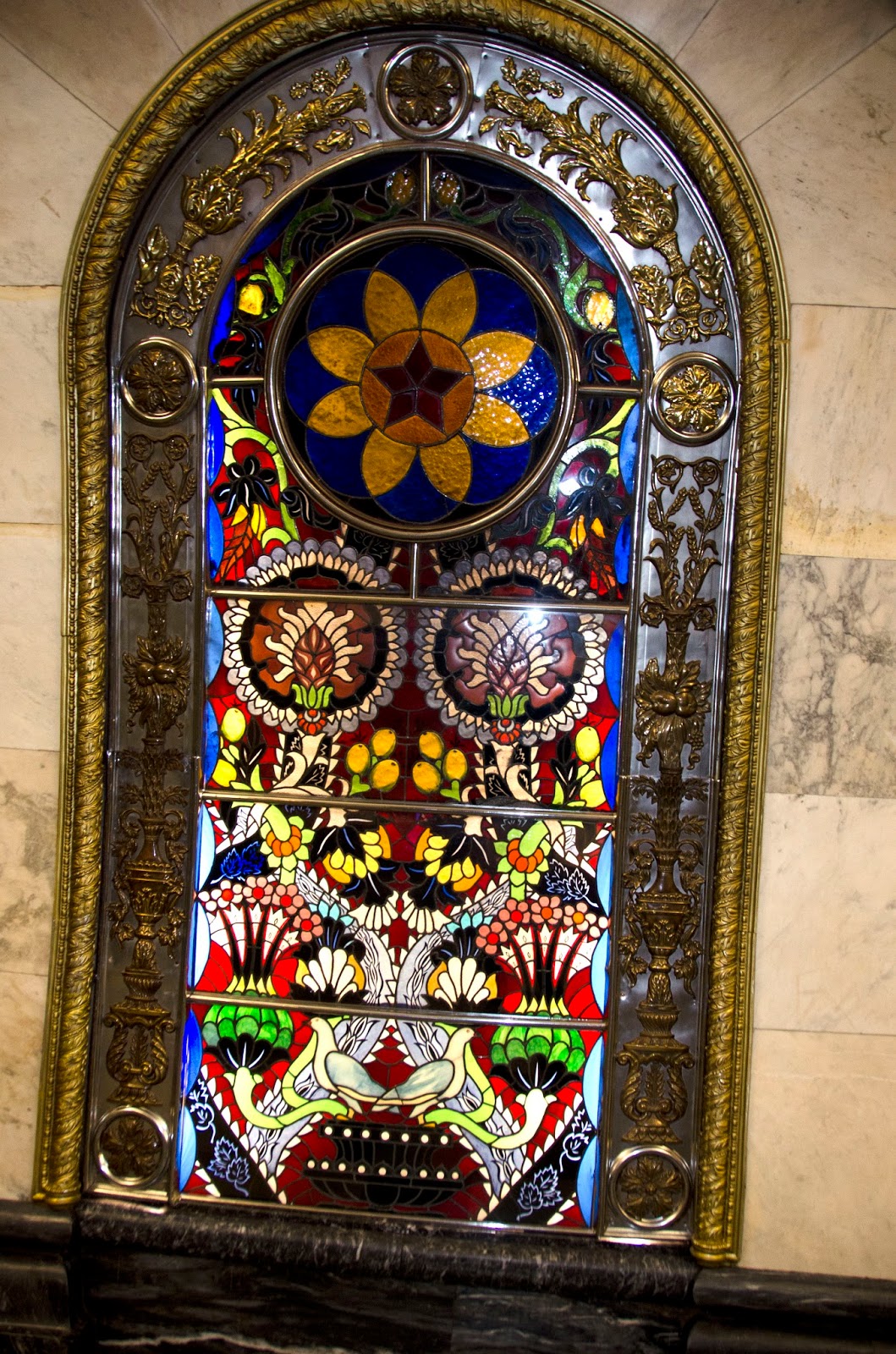
We ask Maria to take us on a tour of the metro underground subways. She is surprised we don’t want to go back to the Red Square and St. Basil’s.  Because of the traffic jams (which we experienced the night before) the metro is the most popular method of transportation. Our guidebook says that up to nine million people use the metro daily ~ more than in New York or London. Construction began in 1931 under Stalin. Architects and engineers spent 4 years building deep stations (350 feet below ground), which served as bomb shelters during World War II. The cost was enormous. Today 10,000 trains run through 12 major lines and 190 stations that connect all parts of the city. We go to 6 or 7 of these decorated stations, which are beautifully decorated with chandeliers, intricate mosaic pictures, marble, stained glass windows, and bronze statues of revolutionary guards, children, students and workers. Moreover, the stations are absolutely immaculate and like an art gallery.

Maria explains why people rub dog's nose 


I am happy to see that women are depicted as athletic as well as men and my favorite bronze busts are of parents and children. 


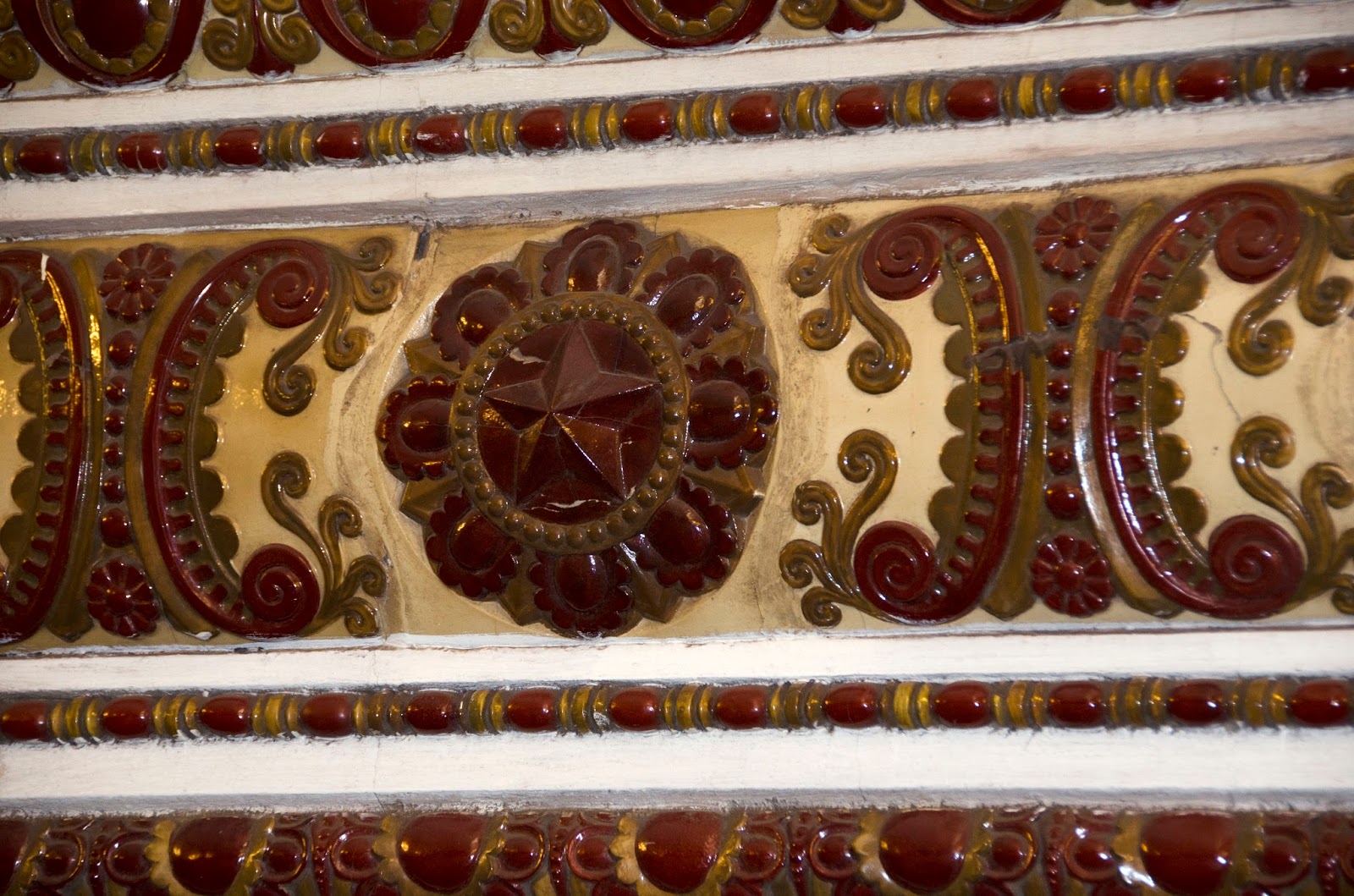
Communist Star Motif 


Lenin in Mosaic on Ceiling 


Pushkin ~ the Poet 


Peace 

Could be a dance hall! 


 It is quite a scene down in bowels of the earth below the streets with thousands of people packed in metro trains and rushing up and down very steep and fast escalators.  


The escalators are long enough that I see one person reading his I-pad and another kissing her boyfriend. 


No Translations & in Cyrillic Alphabet


We feel that navigating this web of lines would be nearly impossible as no signs are in English and all are written with Cyrillic alphabet.  This tour was amazing and a lovely opportunity to people watch. I think about the benefits of communism. To provide working people with the opportunity to see this beauty every day as they go to and from work seems like a real gift ~ why don’t we do something like this in our dismal subways?  


Afterwards we wander home and into an Orthodox Church. St. Basil's looms up around the corner.   


We stop on the Red Square for a coffee and ask Maria many questions about politics, university, gay rights, religion, economic inequality, view of Syria and refugees, ethnic diversity and free speech. Interestingly she asks us about Republicans and Democrats!  We hate to see her rush off for a 3 pm university class and have thoroughly enjoyed this brief glimpse into Moscovite life. However, later I realize I am not sure of her position on religion, gay rights or politics. Perhaps free speech is still struggling. Nonetheless she confirms my belief that Russians are mostly friendly. 


Searching for Bolshoi Theatre Tickets 


Bolshoi Theatre
We are told by the hotel concierge and at the Bolshoi Theatre everything is sold out. However, John insists we go to the Bolshoi Theater to see if we can get some scalped tickets (as John says on the Black Market) for the evening performance of Swan Lake. After all our guide as told us that bribery is an integral part of the economy and our guide book says 20% of the GDP.   In front of the theatre we find 5 large Mafia looking men dressed in black standing out side the ticket booth who offer us some tickets at first for 40,000 rubles.  Later John talks to another member of their team who has adjusted the price to 50,000 rubles.  I am feeling very dicey about this exchange and walk away to ask some young looking students if these guys are legitimate.  By the time I come back John as bought 2 tickets for 19,000 rubles ($290) ~ he is very proud of himself but I am worried this being a big scam. John is much more of a risk taker than I am.  We head back to the hotel for a nap and then go to a trendy bar for a snack before the ballet. John orders a hamburger, which is infinitely better than a MacDonald’s burger.  We are probably three times older than anyone else in this fun bar with loud techno music and much of it in English. I remember Maria telling us one thing she likes about America is the music and movies.  In this restaurant we could easily be in a London bar. Since we don't frequent Seattle bars I can't compare.

Swan Lake and Finding Ideal Love 


We set off for the theatre and have no problem getting in and have delightful and comfortable seats on the 3rd balcony. 

This is the 1733rd performance of Tchaikovsky’s Swan Lake since its first performance at the Bolshoi Theatre in 1877.  It is the 192nd performance of the latest Swan production since 2001.  The choreographer is Yuri Grigorovich. It is an incredible performance both from the music and ballet perspective. John thinks Prince Siegfried had found true and ideal love but later was seduced by another woman (the black swan Odile who disguised herself as his true love ~ represented metaphorically as fate). John tells me that the moral of the story is that men shouldn’t trust women. I on the other hand feel that the Prince had a dark side to his soul that led him astray from staying faithful to his true love. John is outraged that I have this view of men and tells me that Wikepedia confirms his viewpoint. I disagree.  It certainly is a tragic story of love, delusion and despair with both Siegfried and Odette (his true love) feeling betrayed. Perhaps the story is an allegory and more about Siegfried’s delusional dreams regarding ideal love.  He aspires to the ideal love with brief happiness but has a passion for vice. There is much controversy and many different versions of the ending and this version of Swan Lake does not have a fairy tale ending.


Bolshoi Restaurant
We end this lovely day with dinner at the Bolshoi Restaurant. It is warm enough for us to eat outside on the veranda. Russian food on the menu includes caviar, forest mushrooms, borsch, beetroot soup, pikeperch and lots of dishes with sour cream.
John orders what we had the night before pirozhki stuffed with mushrooms and stroganoff. I have veal cutlet with mushrooms. It is delicious.  We ramble home wishing we had 1 or 2 more days here as there is so much more we want to see.

John is in heaven despite his black market activity 


Friday, September 18, 2015

Moscow ~ Magical and Delicious (Part 2 Feb 15-16)


Moscow ~ Magical and Delicious

Clock Tower of Kremlin in Red Square
Outside standing in the Red Square, the heart of the city, we see the magnificence of the cathedrals, the ancient clock tower of the Kremlin (reminding me of Big Ben in London) and the Disneyland fairy–tale magic of St. Basil’s Cathedral and its gilded domes ~ but this is actually real! 

Historical Museum


Orthodox Church and GUM department store 

From the time of Ivan the Great this square has been a huge gathering place for public events, markets, religious processions, festivals, political revolutions  and public executions. I learn that it is called Red Square because the Russian word krasny means red and beautiful. It is bounded by the Kremlin walls, St Basil’s cathedral, the Lenin Mausoleum, the Historical museum and the GUM department.


St. Basil’s Cathedral

St Basil's Cathedral 
Red Square’s most eye-catching structure is St. Basil’s Cathedral. It was built by Ivan IV (the Terrible) from 1555 to 1561 to commemorate the annexation to Russia of the Mongol states of Kazan and Astrakhan. The holy prophet Basil opposed the cruelties of Ivan the Terrible and took on the name of St Basil after Ivan’s death. It has onion domes over 9 chapels, each dedicated to a saint on whose feast day the Russian army won a victory.


We did not go in the Kremlin but walked around the walls, which are half a mile long, 62 feet high and 21 feet thick with 20 towers and gates. Over 10 churches and palaces lie inside.  The Moscow Kremlin is the oldest historical and architectural feature of Moscow. We hope to enter this place tomorrow, but decide due to our jet lag to take a hop on / hop off bus tour around the city. 


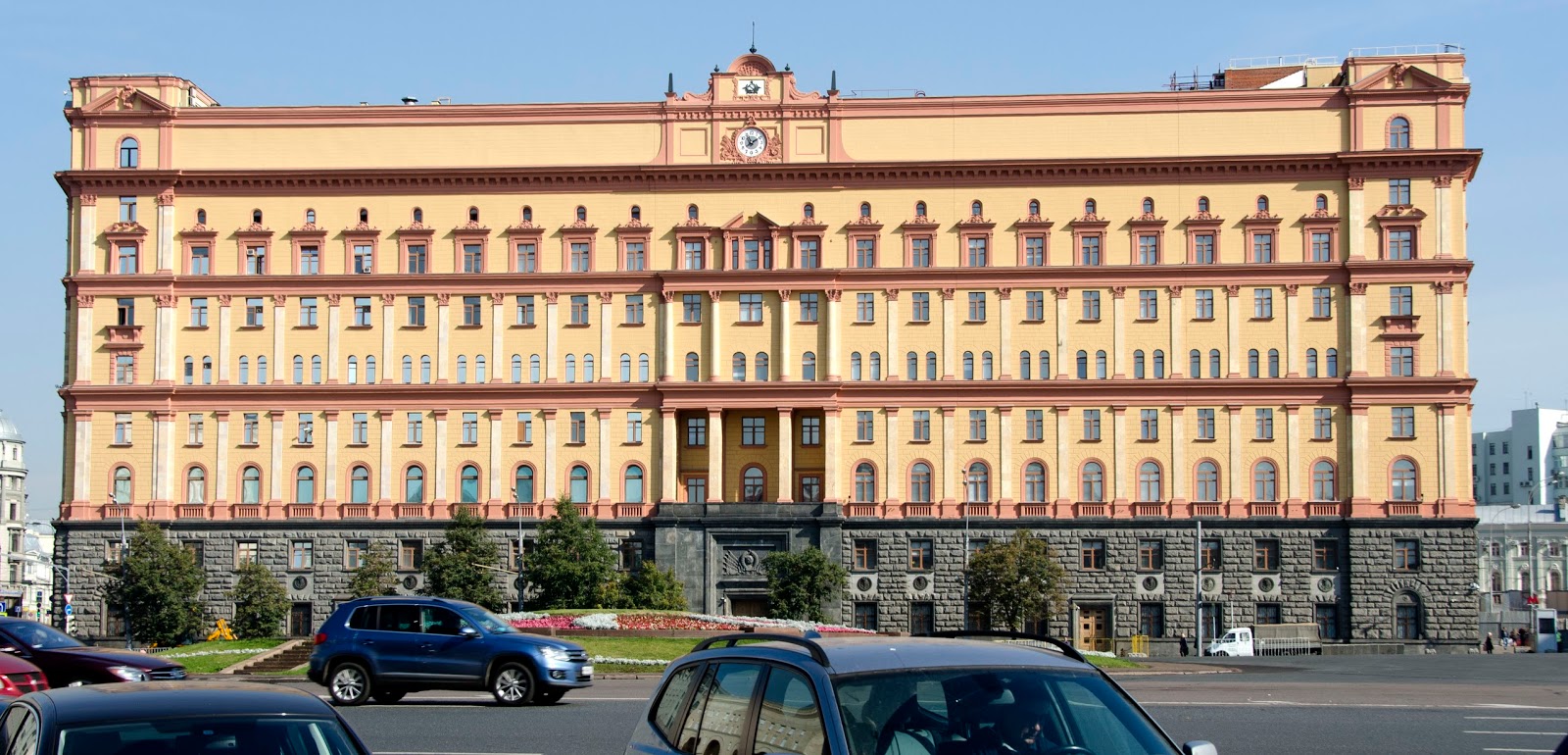
It is a lovely tour of the Moskva, the KGB building (still occupied by current Intelligence Services) and the Bolshoi theatre which we have learned is sold out several months in advance of the shows.  We are falling asleep on the bus so return to our hotel for a nap before our dinner.  What cuisine do we seek?  Why, Russian of course.  We have learned from the newspaper that day that because of the Kremlin’s embargo on Western food imports and an economic downtown many of the restaurants are offering more Russian cuisine.  Surprisingly, apparently 80% of ingredients used by Russian restaurants were imported.  As a result cooks are buying more local ingredients and changing their menus accordingly. We are excited to try out Russian and Georgian cuisine.


Dinner at Café Pushkin


“Moskva how violently the name plucks at any Russian heart!” (Pushkin’s description of his first trip to Moscow)

Leaving at 7 pm for what should be an 8-minute taxi ride but became a 30-minute ride we are immediately stuck in a traffic jam reminding us of Seattle but worse. It is said to have the worst traffic in the world.  However, one difference from Seattle is that these cars are very expensive Mercedes and BMWs. Some government buildings have rows of the costliest models parked in front.  We arrive at this amazing restaurant and are directed to the elegant upstairs library, which has centuries old leather bookshelves, parquet floors, high ceilings, and chandeliers. There is a pianist and harpist providing wonderful music.  The place seems refined while at the same time not pretentious and quite relaxed with families with children and business people enjoying good conversation in many languages. Other floor levels in this restaurant are decorated as a pharmacy and attic. I would definitely return to this restaurant. about the same price as the Pink Door in Seattle.

Choosing from classic Russian cuisine we start with some amazing dumplings filled separately with fish or mushrooms or pickles.  Sharing a delicious crab salad prepared with papaya follows this. Next our main meal is beef stroganoff and I am reminded I once made stroganoff regularly. It is creamy with sour cream not on John’s diet and served with fried potatoes and a pickle salad. I am unable to finish my serving as it is very rich but John does this for me.  I think I will start making this again when on our return to Seattle.  The menu has different kinds of caviar and I learn that Russia is the largest producer of caviar in the world, processing over 1,000 tons per year. I wonder since we have so much salmon in Seattle why we rarely see this on our menus. In Russia it is considered a health food. My guidebook tells me that Czar Nicholas II made his children eat caviar with black bread every morning.  I wonder if that is standard parenting practice today in Russia?  We eat the black bread, do not order caviar and John avoids the beet borsch because beets are the only thing he doesn’t eat.  I point out to him that he was eating a beet salad on the plane; however he didn’t realize what he was eating. On our first night here, we decide not to partake in vodka toasting.


After dinner we go back to Red Square where the GUM, Kremlin and St. Basil’s are all lit up magnificently.  People are strolling and enjoying the atmosphere and eating at outside cafes.  We have heard very little English this entire day and those to whom we have asked questions have either ignored us or looked at us in confusion. 
I feel a bit like a child with autism as I can't understand the language or be understood when I talk and even reading is perplexing because the alphabet is different. I wish we were with a Russian friend who we could ask questions about real life here.

See Part 3 next 


Russia ~ Intimidating and Fascinating (Part 1 Sept 15)

September 15, 2015


 Russia ~ Intimidating & Fascinating

Russia was not high on my travel “bucket list” but John as always was eager to go and chomping at the bit to explore. While US news is not particularly positive about Putin and Russian politics and friends ask why we want to go there I have had some experience reviewing translated videos of Russian parents using the Russian translated version of my Incredible Years parent programs. The Russian parents seemed like delightful people with goals similar to parents’ goals in Western countries.  Moreover, one of our IY mentors and group leaders is a Russian psychiatrist and an absolutely delightful person who exudes emotional warmth. Every time I see her she brings gifts of something she has made herself and showers me with affection.  She contradicts the commonly held stereotype of Russians as stern, glum and formal.

John wanted to do this trip without an organized tour group but right away I got the sense this wasn’t going to be simple as an independent traveler. In order to get a visa we had to have someone invite us or sponsor us for this trip. Because we weren’t going to my Russian friend’s hometown we had to have a letter from someone who would verify every day of our entire trip agenda. Eventually John found a hotel in St. Petersburg allied with another company who for a fee would verify both our Moscow and our St. Petersburg stays. Our Moscow hotel would not verify our St. Petersburg dates. Getting the visa itself was somewhat daunting.  John completed an extensive application that asked for the addresses and names of everyplace we have ever worked and the dates for every place we have traveled to for the last 10 years. You can imagine our travel list was lengthy. Once completing this application and having it stamped for authenticity by our bank, we had an appointment for an interview to apply for the visa.  A young woman who looked the Russian part by being stern and without emotion did this interview. When I asked her how long she had lived in Seattle she replied, “we are not allowed to discuss those things.”  She did not like the way John had completed the application, threw away the bank stamped document and redid the application ~ for a price of course.
Already this trip seemed somewhat intimidating which enhanced John’s fascination.


Our 9-hour flight on Delta from Seattle to Amsterdam was without problems. After a 5-6 hour flight layover we take a 3.5-hour flight via Aeroflot arriving at International airport, located about an hour’s drive from Moscow.  Driving in we feel we could be in any city in the world, except for the billboards with their different alphabet and language.  At midnight we are at the beautiful St. Regis Hotel located in the heart of the city and with views of the Kremlin and Red Square.  In fact we can actually see the KGB headquarters from our bedroom window.
KGB Headquarters 
 I think of all the movies I have seen about KGB while John worries about where he can get a SIM card for his I-pad and I-phone. John tells me the tour book says to drink only bottled water. It is hard to believe that in this elegant hotel, water would be a problem.

One Side of Red Square 


Post-Communist Moscow
Moscow once again became the capital of Russia in 1918 after more than two centuries in St Petersburg. This time Moscow would govern the world’s first socialist state ~ the Soviet Union. With the formation of the Commonwealth of Independent States and the collapse of a troubling communist past, it is now clearly the hub of the country’s industry, politics, finance and culture. It has 46 provinces (similar to the US states) and has a population of 140 million people. Over the past 2 decades Moscow has become a burgeoning world capital, which is vibrant and modern. (although President Medvedev fired the mayor in 2010 for this glamorous face-lift and asserted both his and Putin’s indispensible power). The eleven million people living here are known as Muscovites, just as people from New York are known as New Yorkers.  Putin is now President again as he has traded place with Medvedeve who is now Prime Minister. Next election is 2018, perhaps they will trade again.


Walking out of our hotel in the morning towards Red Square I am astonished by the grandeur of the wide pedestrian walkway lined with high end department stores, boutiques, internet coffee cafes, elegant restaurants, museums and galleries. The economy appears to be booming with everything available both Russian and Western. 

It seems strange for us to walk by Brooks Brothers and see George Clooney flags advertising a watch while other stores are selling matryoskha dolls in Russian dress. 

Brooks Brother Window 
Post communist consumerism on steroids

GUM Department Store 
The GUM department store is the most amazing store I have ever seen. Stretching across the entire northeastern side of Red Square, 1.5 miles in length, it is a 3-story state universal store, the largest in Russia. The place is a showcase for international goods and built of steel and concrete with ornate glass roofing and lined with cafes.  


We find the Megaphon cellular store and John updates his technology with Russian Sim cards.  


Then we pay 250 rubles to enter the most expensive bathroom in Moscow that is done in elegant marble. John decides to stay in the bathroom so long that I panic searching the store for where I might have lost him. 


Watermelon Fountain
I think about my psychiatrist friend living in a small one bedroom apartment and earning a tiny salary and wonder at the extremes of multi-millionaires and the homeless and destitute in this country. My guidebook tells me that there are 70 billionaires in Moscow and the large number of luxury cars in central Moscow attest to the wealth of at least a few of the locals. There is a sense here of frenzied consumerism and I think that Lenin must be quaking in his tomb. Is this what communism leads to?  Unfortunately we missed seeing Lenin lying in his tomb as it was closed but we are told that people still queue up in front of his Mausoleum to view the Father of the Great October Revolution.  The next day our guide tells us that when Macdonald’s opened (the first fast food restaurant to open) there was a line up equally as long as for Lenin ~ four hours to get a hamburg!

Stay tuned for Parts 2 and 3